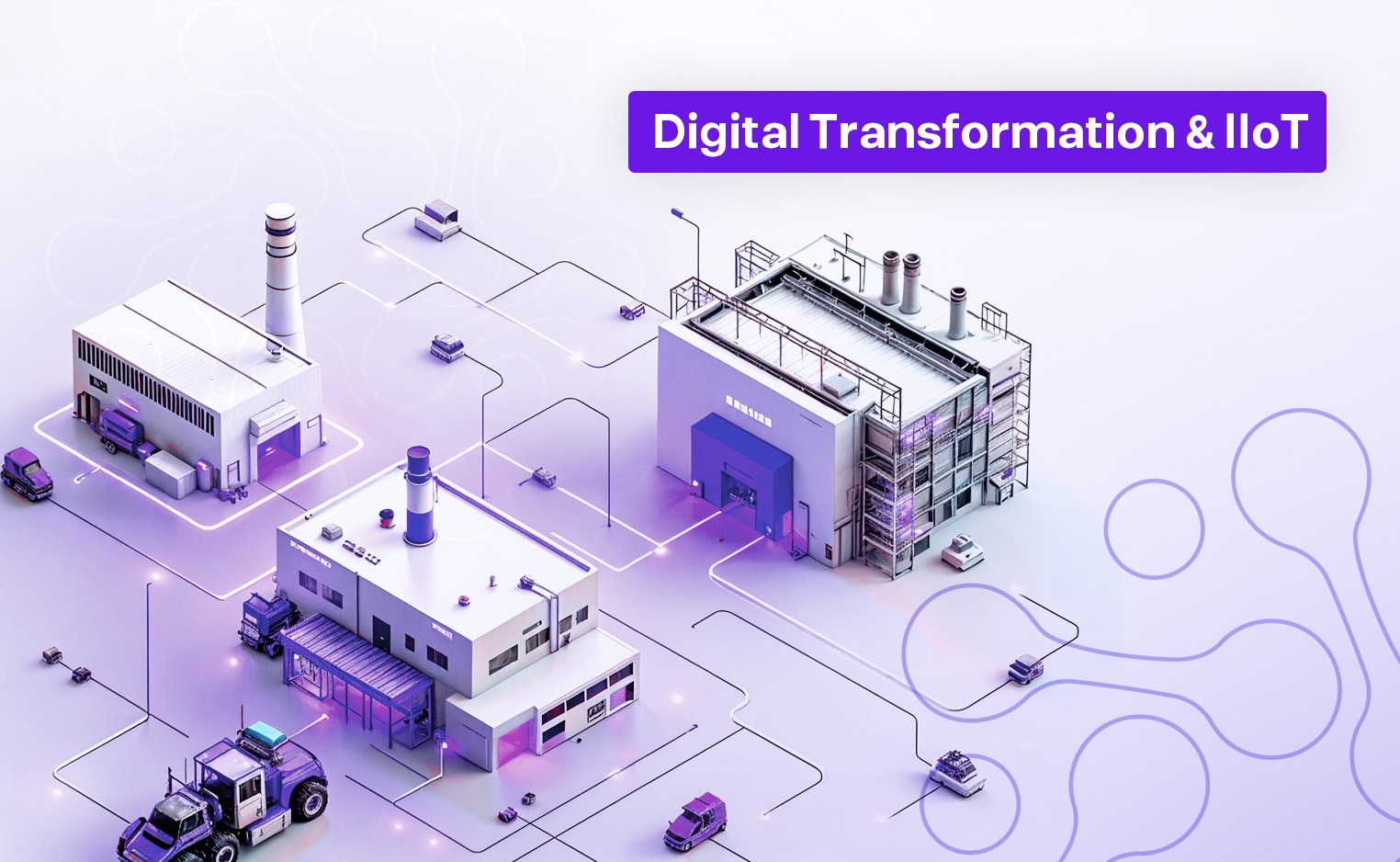
Industries We Serve
-
Manufacturing:
Smart factories with IoT-connected machines. Real-time monitoring of OEE, throughput, downtime, and energy use provides visibility into performance.
Use cases: connected assembly lines, digital work instructions, line-by-line energy monitoring, automated quality inspection. -
Automotive:
From plant floor to vehicles. Sensor-equipped robots and PLCs enable flexible automation and just-in-time production; test labs and in-service vehicles feed IoT data back to R&D for better design.
Use cases: IoT-based parts tracking, real-time assembly dashboards, predictive maintenance of robots and CNC machines. -
Healthcare:
The Internet of Medical Things (IoMT) connects devices, wearables, and systems. Patient monitors stream vital signs to care platforms; asset tags track equipment (ventilators, pumps); building sensors optimize HVAC and lighting.
Use cases: remote patient monitoring, equipment/location tracking, smart hospital energy systems, predictive maintenance of medical devices. -
Energy & Utilities:
IIoT spans oil & gas and power grids. Sensors on rigs, wells, and pipes monitor pressure, flow, and vibration for predictive maintenance and leak detection.
Use cases: offshore rig monitoring, smart SCADA for pipelines, digital twins of refinery units, self-healing grid analytics. -
Finance & Insurance:
IoT modernizes branch and risk management. Sensors monitor ATM and branch environments for security and preventive maintenance; telematics enable usage-based insurance.
Use cases: smart branch monitoring (climate, security), auto insurance telematics, IoT alerts for property risk. -
Retail:
Brick-and-mortar stores become smart environments. RFID/weight sensors track inventory in real time; environmental sensors control lighting/HVAC; cameras and beacons analyze foot traffic.
Use cases: automated shelf management, sensor-driven checkout, IoT-driven personalized customer experiences. -
Durable Goods:
Manufacturers of appliances, electronics, vehicles, and machinery embed IoT for connected services. In factories, IIoT boosts production efficiency; in the field, products report usage data for remote diagnostics.
Use cases: over-the-air updates for vehicles, smart home appliances monitoring filter and performance, industrial machines streaming telemetry for service scheduling.
IIoT Solution Portfolio
-
Industrial IoT Platform:
A scalable, open IoT backbone (cloud or edge) that unifies data from any sensors, PLCs, or machines via MQTT, OPC UA, etc. This “single data model” eliminates silos.
Key value: unified data access, rapid deployment (no production downtime), and a future-proof foundation for all analytics and AI. -
Manufacturing Information System (MIS):
Real-time production monitoring and digital twin for the shop floor. Captures machine status, cycle counts, quality metrics, and energy use by workstation. (Embedded analytics detect root causes of stoppages.)
Key value: higher OEE and throughput (studies show up to ~10% productivity gains), energy waste reduction, safer paperless operations. -
MES – Smart Factory Management:
An IIoT-enabled MES linking production, materials, quality, energy, and maintenance. Provides digital work orders, planning/scheduling tools, mobile/operator interfaces, and integrated QC.
Key value: end-to-end visibility (ERP-to-floor), optimized scheduling, automated maintenance triggers, and data-driven continuous improvement. -
Predictive Maintenance & Quality:
AI analytics on sensor data (vibration, temperature, oil analysis, etc.) predict failures and defects before they occur. Anomaly detection triggers alerts and maintenance work orders proactively.
Key value: dramatic downtime reduction (up to ~50–70%) and maintenance cost savings (~20–25%), boosting equipment availability and safety. -
Energy Monitoring & Sustainability:
Continuous tracking of electricity, gas, and water usage, correlated with production data. Dashboards and rule engines flag anomalies and forecast demand.
Key value: identify waste and save costs (typically ≈25% energy cost reduction), lower carbon footprint, and ensure compliance with sustainability goals. -
Asset Tracking (RTLS) & Remote Asset Management:
Real-time location of equipment, vehicles, and personnel indoors (UWB) and outdoors (GPS), with analytics to optimize usage. Also monitors remote field assets (pumps, generators) via rugged IoT gateways.
Key value: reduce search/idle time, optimize routing/fleet usage, enhance safety (zone alerts), and avoid costly remote failures via 24/7 health monitoring. -
AI & Analytics Consultancy:
A hands-on program pairing clients with experts (data scientists, consultants) to define high-impact AI use cases and build capabilities. Delivers a custom AI roadmap, training, and ongoing support.
Key value: faster time-to-value on analytics projects, higher success rates, and in-house AI skill-building while avoiding common pitfalls. -
Industry 4.0 & Data Maturity Assessment:
A comprehensive audit of factory OT/IT connectivity and data/AI readiness. Maps current “as-is” state, pinpoints gaps (automation, data flow, skills), and prioritizes projects.
Key value: clear transformation roadmap for highest ROI initiatives (e.g., predictive maintenance, quality control), and typical gains like 15–30% inventory reduction and 10–20% lower logistics costs from better planning. -
Manufacturing, Quality, Asset & Sustainability AI:
AI-driven optimization modules for factories. Machine-learning models predict product quality deviations and optimize process parameters (digital twin simulations), forecast equipment failures (Asset AI), and analyze energy/emissions (Sustainability AI).
Key value: higher first-pass yield (≤30% scrap reduction), extended asset life, improved environmental metrics, and informed decision-making via dashboards. -
Assembly Management:
A digital system for guided assembly lines. Integrates with torque tools, RFID/barcode trackers, and conveyors to ensure correct parts and sequences. Provides step-by-step instructions and real-time validation.
Key value: eliminate assembly errors (boost first-pass quality), full traceability for root-cause analysis, and reduced rework/warranty costs. -
Supply Chain Planning & Monitoring (SCM Suite) & Maturity Test:
An integrated AI-powered platform for demand forecasting, inventory optimization, network/logistics planning, and scenario analysis. Combines real-time data with advanced algorithms.
Key value: higher forecast accuracy and service levels, reduced inventory (15–30%) and working capital, and smoother supply chain operations (case studies report 4–6% revenue lift and 10–20% cost reduction).
Leadership & Expertise
-
Open Standards & Security: Our solutions are built on industry standards (OPC UA, MQTT, HTTPS, etc.) with security-by-design. We follow frameworks like IEC/ISA 62443 and ISO/IEC 27001 to ensure data confidentiality, integrity, and availability in critical control systems.
-
Compliance & Quality: We adhere to global and regional regulations (including Saudi data/privacy laws) and industry-specific standards (e.g., medical device networking, petrochemical safety). We integrate secure practices (encrypted comms, VPNs) to meet audit requirements.
-
Trusted Partnerships: We collaborate with leading cloud and hardware vendors, leveraging best-of-breed technologies. Our team includes certified IIoT and cybersecurity professionals. This ecosystem approach ensures reliable, scalable deployments.
-
Business-Driven Innovation: By combining IIoT, AI, and automation, we deliver measurable business outcomes. Clients see continuous improvements – for example, smart factories often achieve 5–10% higher throughput and 35–50% faster maintenance resolution by shifting from reactive to proactive operations.
Accelerating Manufacturing Transformation Through a Globally Recognized Framework
Helping manufacturers understand where they are today and define where they need to be tomorrow, our Certified SIRI Assessors use the globally recognized Smart Industry Readiness Index (SIRI) framework to evaluate manufacturing readiness across the dimensions of Process, Technology, and Organization through structured assessments and stakeholder workshops. The assessment benchmarks current capabilities against industry best practices, identifies transformation gaps and priorities, and provides a clear roadmap for digital transformation, enabling informed investment decisions, improved operational performance, and alignment with Saudi Arabia's Factories of the Future initiative and national industrial development objectives.
Transformation Roadmapping
We translate assessment insights into prioritized transformation roadmaps using SIRI's Prioritization Matrix, evaluating initiatives against business KPIs, cost impact, planning horizons, and strategic objectives to maximize business value and transformation outcomes.
Gap Analysis & Benchmarking
We assess capability gaps and benchmark performance against global SIRI standards and industry peers, providing a clear view of current maturity, target-state aspirations, and key opportunities for operational and digital advancement.
Industry 4.0 Strategy Development
We help organizations define and align digital transformation strategies with business priorities, operational objectives, and technology investments, creating a structured pathway toward smart manufacturing, operational excellence, and sustainable competitiveness.
Key Benefits
- Gain a clear and objective view of your manufacturing digital maturity
- Benchmark against global best practices and industry leaders
- Identify high-impact opportunities that maximize business value and ROI
- Prioritize transformation initiatives based on strategic importance and operational impact
- Align digital transformation investments with business goals and growth ambitions
- Accelerate productivity, quality, resilience, and operational performance
- Develop a practical, measurable, and execution-ready transformation roadmap
- Build future-ready capabilities across technology, processes, workforce, and governance
- Drive sustainable competitive advantage through Industry 4.0 excellence